No products
Product successfully added to your shopping cart
There are 0 items in your cart. There is 1 item in your cart.
Aircraft type
- Aermacchi MB-326
- Aero L-39 Albatros
- Aérospatiale AS350 Ecureuil
- Airbus A330 MRTT
- A400M Atlas
- Airspeed Horsa
- Albatros D.I / D.II / D.III
- Albatros D.V
- Arado Ar 234 Blitz
- Avro Lancaster
- Beechcraft 17 Staggerwing
- Beechcraft C-45 Expeditor
- Bloch MB.150/151/152/155
- Boeing B-17 Flying Fortress
- Boeing B-29 Superfortress
- Bréguet 1150 Atlantic
- Brewster F2A Buffalo
- Cessna L-19/O-1 Bird Dog
- Consolidated B-24 Liberator
- Consolidated PBY Catalina
- Curtiss C-46 Commando
- Curtiss P-36 Hawk
- Curtiss P-40 Warhawk
- Dassault Ouragan
- Dassault Mystère IV
- Dassault Super Mystère
- Dassault Mirage III
- Dassault Mirage IV
- Dassault Alpha Jet
- Dassault Etendard & Super Etendard
- Dassault Mirage 2000
- Dassault Rafale
- Dassault Falcon 900
- de Havilland DH.60 Moth
- de Havilland DH.82 Tiger Moth
- de Havilland DH.88 Comet
- de Havilland DH.98 Mosquito
- Dewoitine D.520
- Douglas A-20 Havoc
- Douglas C-47 Dakota
- Douglas SBD Dauntless
- Embraer EMB 312 Tucano
- Eurocopter EC120 Colibri
- Eurocopter EC665 Tigre
- Eurocopter EC725 Caracal
- Focke-Wulf Fw 190
- Fouga Magister & Zéphyr
- Gee Bee racers
- Grumman F4F Wildcat
- Grumman F6F Hellcat
- Halberstadt CL.II
- Hawker Fury
- Hawker Hart family (Hart, Demon, Audax, Hardy, Osprey, Hind)
- Hawker Hurricane
- Hawker Sea Fury
- Hawker Tempest
- Hawker Typhoon
- Lockheed F-117 Nighthawk
- Lockheed P-80/F-80 Shooting Star
- Lockheed SR-71 Blackbird
- Macchi C.202 Folgore
- Macchi C.205 Veltro
- Martin B-26 Marauder
- McDonnell Douglas F-15 Eagle
- Messerschmitt Bf 109
- Mitsubishi A6M Zero
- Mudry CAP 10
- Nord 2501 Noratlas
- North American B-25 Mitchell
- North American P-51 Mustang
- North American T-6 Texan
- Pilatus PC-7
- Pilatus PC-21
- Piper Cub & Super Cub
- Republic F-84 Thunderjet
- Republic P-47 Thunderbolt
- SEPECAT Jaguar
- SOCATA TB-30 Epsilon
- Stampe & Vertongen SV.4
- Stinson L-5 Sentinel
- Sud-Aviation SA316 Alouette III
- Sud-Aviation SA340/341/342 Gazelle
- Sukhoi Su-47 Berkut
- Supermarine Spitfire
- Vought F4U Corsair
- Vought F-8 Crusader
- Waco CG-4
- Yakolev Yak-3
Free delivery
for orders over 50€
* depending on destination30 Days
100% Satisfaction
Money-Back Guarantee
Aircraft type There are 1193 products.
Subcategories
Aermacchi MB-326
Aero L-39 Albatros
Aérospatiale AS350...

Airbus A330 MRTT
The Airbus A330 MRTT (Multi Role Tanker Transport) is a versatile air-to-air refueling aircraft based on the civilian A330-200. Operated by numerous air forces worldwide, it combines the roles of tanker and strategic transport, offering exceptional range, payload capacity, and efficiency. Its advanced refueling systems and spacious cabin make it a key asset in modern aerial operations.

A400M Atlas
The Airbus A400M Atlas is a new-generation military transport aircraft designed to meet the needs of both strategic and tactical missions. Combining long range, high payload capacity, and excellent performance on short or unprepared runways, the A400M bridges the gap between tactical airlifters and strategic cargo aircraft. Its versatility and advanced technology make it a key component of 21st-century air mobility.

Airspeed Horsa
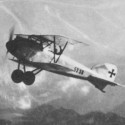
Albatros D.I / D.II /...
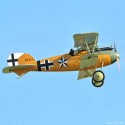
Albatros D.V
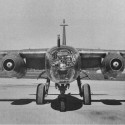
Arado Ar 234 Blitz
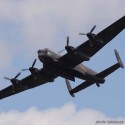
Avro Lancaster

Beechcraft 17 Staggerwing
The Beechcraft Model 17 Staggerwing, introduced in the 1930s, is one of the most elegant and iconic aircraft of its era. Known for its distinctive "staggered" biplane configuration—where the lower wing is positioned ahead of the upper wing—the Staggerwing was designed with both performance and aesthetics in mind. Its streamlined fuselage, retractable landing gear, and luxurious interior made it stand out as a premier aircraft for business executives and private owners.
Beyond its stunning appearance, the Staggerwing was innovative for its time. With a fully enclosed cockpit, smooth lines, and powerful radial engine, it could reach speeds that rivaled contemporary military aircraft, a rare feat for a civilian plane. It was also highly versatile, serving in various roles from executive transport to air ambulances and even military liaison duties during World War II. The combination of speed, elegance, and advanced technology made the Staggerwing a symbol of luxury and performance in aviation history.
Beechcraft C-45 Expeditor
Bloch MB.150/151/152/155
Boeing B-17 Flying...
Boeing B-29 Superfortress
Bréguet 1150 Atlantic
Brewster F2A Buffalo
Cessna L-19/O-1 Bird Dog
Consolidated B-24...
Consolidated PBY Catalina
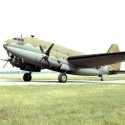
Curtiss C-46 Commando
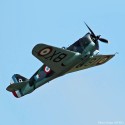
Curtiss P-36 Hawk
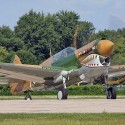
Curtiss P-40 Warhawk
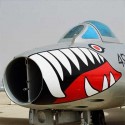
Dassault Ouragan
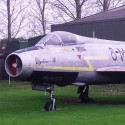
Dassault Mystère IV
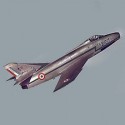
Dassault Super Mystère
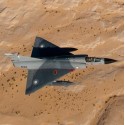
Dassault Mirage III
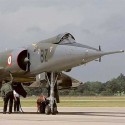
Dassault Mirage IV
Dassault Alpha Jet
Dassault Etendard &...
Dassault Mirage 2000
Dassault Rafale
Dassault Falcon 900
de Havilland DH.60 Moth
de Havilland DH.82...
de Havilland DH.88 Comet
de Havilland DH.98...
Dewoitine D.520
Douglas A-20 Havoc
Douglas C-47 Dakota
Douglas SBD Dauntless
Embraer EMB 312 Tucano
Eurocopter EC120 Colibri
Eurocopter EC665 Tigre
Eurocopter EC725 Caracal
Focke-Wulf Fw 190
Fouga Magister & Zéphyr
Gee Bee racers
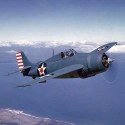
Grumman F4F Wildcat
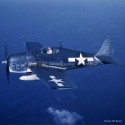
Grumman F6F Hellcat
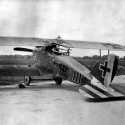
Halberstadt CL.II
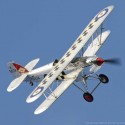
Hawker Fury
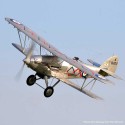
Hawker Hart family...
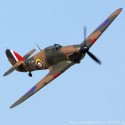
Hawker Hurricane
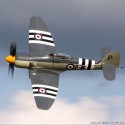
Hawker Sea Fury
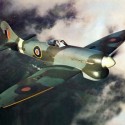
Hawker Tempest
Hawker Typhoon
Lockheed F-117 Nighthawk
Lockheed P-80/F-80...
Lockheed SR-71 Blackbird
Macchi C.202 Folgore

Macchi C.205 Veltro
Martin B-26 Marauder
McDonnell Douglas F-15...
Messerschmitt Bf 109
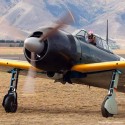
Mitsubishi A6M Zero
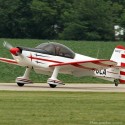
Mudry CAP 10
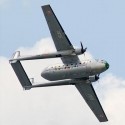
Nord 2501 Noratlas
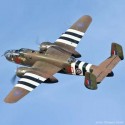
North American B-25...
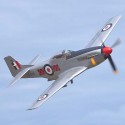
North American P-51...
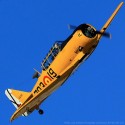
North American T-6 Texan
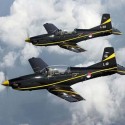
Pilatus PC-7
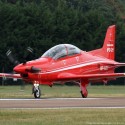
Pilatus PC-21
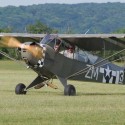
Piper Cub & Super Cub
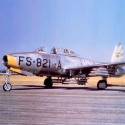
Republic F-84 Thunderjet
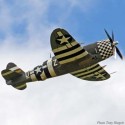
Republic P-47 Thunderbolt
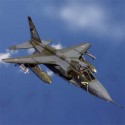
SEPECAT Jaguar
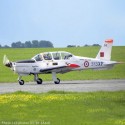
SOCATA TB-30 Epsilon
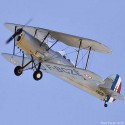
Stampe & Vertongen SV.4
Stinson L-5 Sentinel
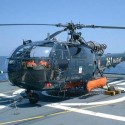
Sud-Aviation SA316...
Sud-Aviation...
Sukhoi Su-47 Berkut
Supermarine Spitfire
Reginald Mitchell's legendary fighter, with its elliptical wings and perfect looks, became a symbol of the Royal Air Force and British courage and resilience. It was one of the few fighter types to see service during the entire Second World War.
Vought F4U Corsair
Vought F-8 Crusader
Waco CG-4
Yakolev Yak-3
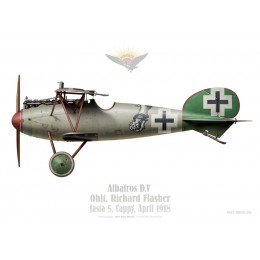
Albatros D.V, Oblt. Richard Flasher, CO Jasta 5, Cappy, April 1918 Albatros D.V, Oblt. Richard Flasher, CO...
Oberleutnant Richard Flasher flew this Albatros D.V while he commanded Jasta 5 in April 1918. Oberleutnant Richard Flasher flew...
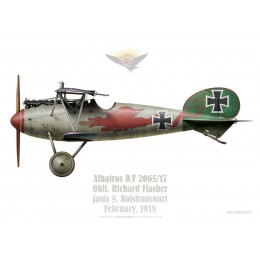
19,00 €In StockAlbatros D.V, Oblt. Richard Flasher, CO Jasta 5, Boistrancourt, February 1918 Albatros D.V, Oblt. Richard Flasher, CO...
Oberleutnant Richard Flasher flew this dragon-adorning Albatros D.V while he commanded Jasta 5 in early 1918. The aircraft was later assigned to Ltn. Hans Joachim von Hippel. Oberleutnant Richard Flasher flew...
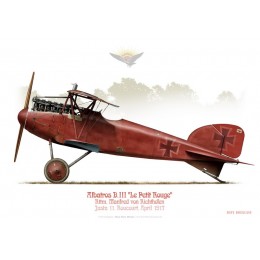
19,00 €In StockAlbatros D.III, Rttm. Manfred von Richthofen "The Red Baron", Jasta 11, Rocourt, April 1917 Albatros D.III, Rttm. Manfred von...
Manfred Albrecht Freiherr von Richthofen (1892-1918), better known as the Red Baron, was the top ace of the war, being officially credited with 80 air combat victories. Wanting to be recognized by friends and foes alike on the aerial battlefield, he painted his aircraft overall red. Manfred Albrecht Freiherr von...
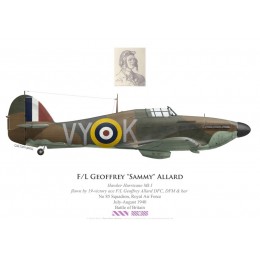
19,00 €In StockHawker Hurricane Mk I, F/L Geoffrey "Sammy" Allard DFC, DFM & Bar, No 85 Squadron, Royal Air... Hawker Hurricane Mk I, F/L Geoffrey...
F/L Geoffrey "Sammy" Allard was credited with 19 aerial victories, 5 shared victories and two probables, all achieved during the Battle of France and the first weeks of the Battle of Britain. F/L Geoffrey "Sammy" Allard was...
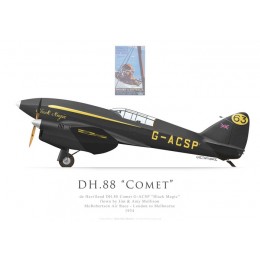
19,00 €In StockDH.88 Comet "Black Magic", G-ACSP, Jim & Amy Mollison, McRobertson air race, 1934 DH.88 Comet "Black Magic", G-ACSP, Jim &...
The DH.88 Comet "Black Magic" was entered in the London-to-Melbourne McRobertson race by Jim and Amy Mollison in 1934. After leading the race initially, the couple was forced to abandon due to mechanical problems. The DH.88 Comet "Black Magic" was...
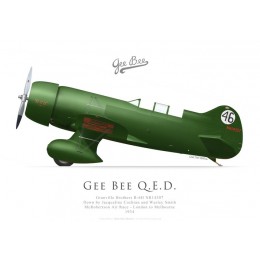
19,00 €In StockGee Bee QED, Jacky Cochran & Wesley Smith, 1934 MacRobertson race Gee Bee QED, Jacky Cochran & Wesley Smith,...
Sponsored by Lucky Strike, the Gee Bee QED was entered in the London-to-Melbourne McRobertson race by Jacqueline Cochran and Wesley Smith in 1934, but had to abandon due to mechanical problems. Sponsored by Lucky Strike, the Gee...
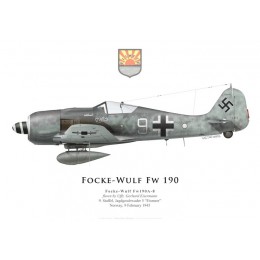
19,00 €In StockFw 190A-8, Oblt. Rudi Linz, 12./JG 5, February 1945 Fw 190A-8, Oblt. Rudi Linz, 12./JG 5,...
Luftwaffe ace Rudi Linz (14 February 1917 – 9 February 1945) was credited with 70 enemy aircraft shot down. He was shot down and killed during the "Black Friday" aerial battle over Norway on 9 February 1945 and was posthulously awarded the The Knight's Cross of the Iron Cross. Luftwaffe ace Rudi Linz (14 February...
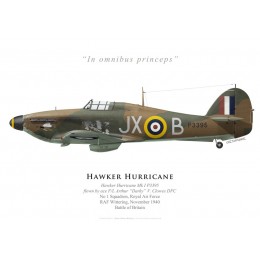
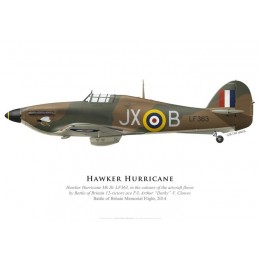
19,00 €In StockHawker Hurricane Mk I, F/L Arthur Clowes DFC, No 1 Squadron, Royal Air Force, November 1940 Hawker Hurricane Mk I, F/L Arthur Clowes...
F/L Arthur Clowes was credited with 11 aerial victories in 1939 and 1940, and was awarded the DFC and DFM for his actions. F/L Arthur Clowes was credited with...
19,00 €In Stock"Angels also have wings" "Angels also have wings"
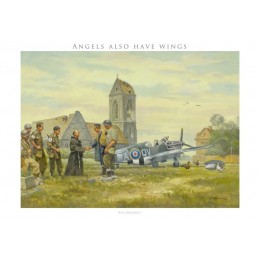
Hours after the Allied invasion in Normandy, on June 6, 1944, a Mustang Mk III (FZ190) of 19 Squadron of the Royal Air Force has landed at B-12, a British Advanced Landing Ground, for repairs. Hours after the Allied invasion in...
40,00 €In Stock"Return to Kunming" "Return to Kunming"
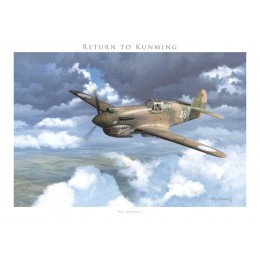
American ace David Lee “Tex” Hill returns to the American Volunteer Group headquarters in Kunming, China with his Curtiss H81-A2 “Tomahawk”. American ace David Lee “Tex” Hill...
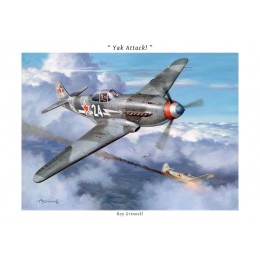
40,00 €In Stock"Yak Attack" "Yak Attack"
At the controls of his Yakolev Yak-3 bearing the colours of the Normandie-Niémen fighter group, Roland de la Poype obtains his fifteenth aerial victory by downing a Focke-Wulf W 190 on 23 October 1944. It was the group's 182nd aerial victory on the Eastern Front. At the controls of his Yakolev Yak-3...
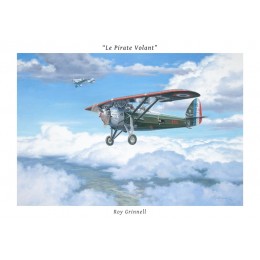
40,00 €In Stock"Le Pirate Volant" (The flying pirate) "Le Pirate Volant" (The flying pirate)
A Morane-Saulnier MS.315 in flight, bearing the Escadrille Régionale de Chasse 571's emblem. It is escorted by a Dewoitine D.510 fighter. The unit's emblem was a black pennant with an Algerian pirate's head. A Morane-Saulnier MS.315 in flight,...
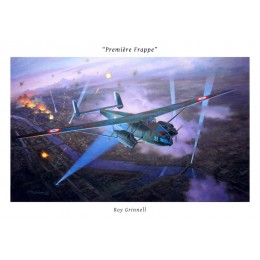
40,00 €In Stock"First Strike" (Première Frappe) "First Strike" (Première Frappe)
The Farman 223-4 was the first Allied aircraft to bomb Berlin in World War II. It was initially designed as a transatlantic postal aircraft for Air France, but three aircraft were acquired by the French navy. One of these, nicknamed the “Jules Verne”, was modified in April 1940 as a makeshift strategic bomber under the direction of Capitaine de Corvette... The Farman 223-4 was the first Allied...
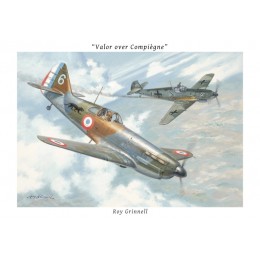
40,00 €In Stock"Valor over Compiègne" "Valor over Compiègne"
In the afternoon of June 5, 1940, Werner Mölders, Germany's ace of aces with 25 aerial victories and Gruppenkommandeur of III./JG 53, led his unit on patrol over France. Spotting a group of French fighters near Compiègne, he gave the signal for the attack, expecting an easy victory. In the afternoon of June 5, 1940,...
40,00 €In Stock